Legacy
Apprenticeship
Image: An Interior View of A Jamaica House of Correction (An Interior View of a Jamaica House of Correction, 1834).
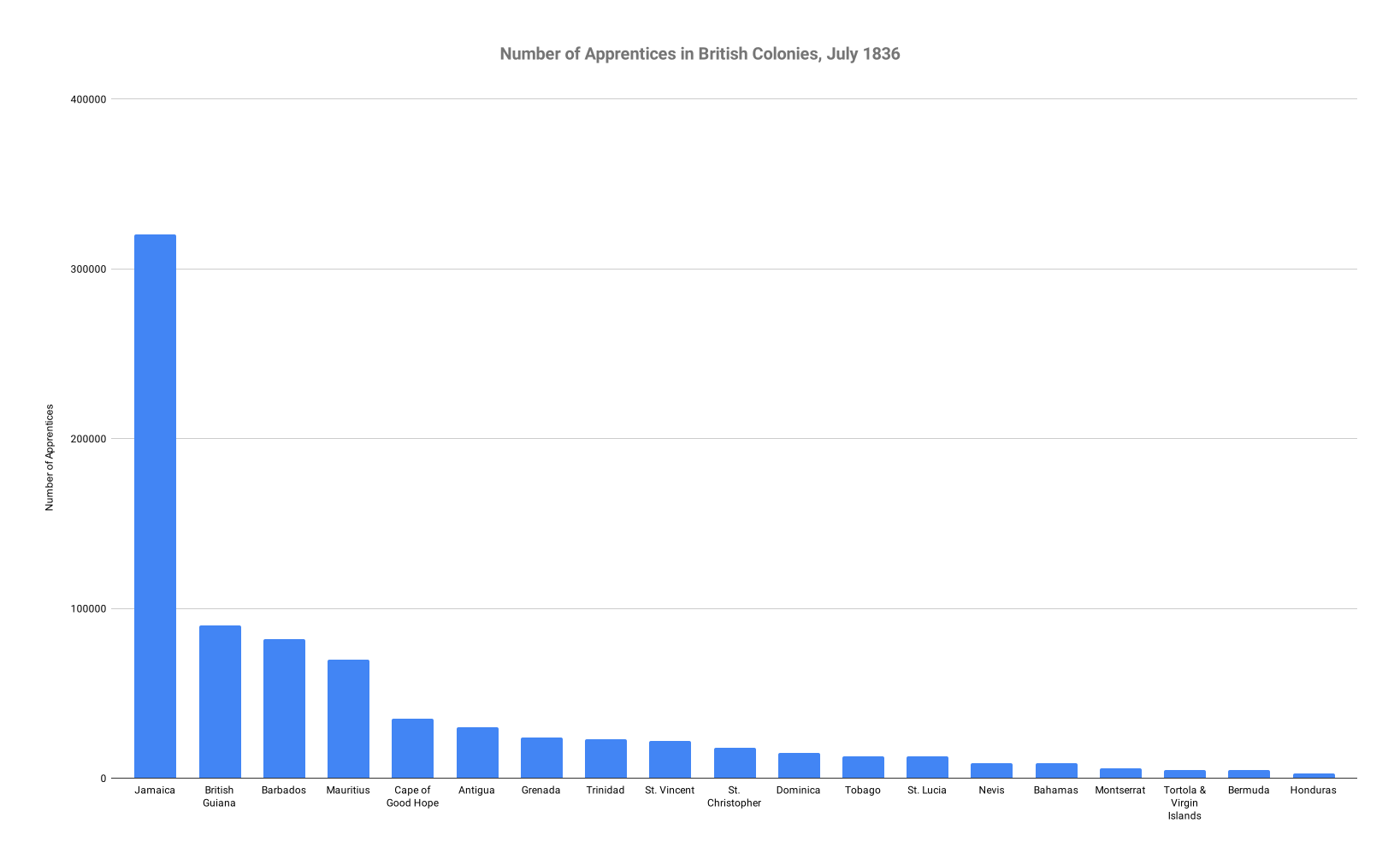
Apprentices totaled ~800,000 across British colonies (Macaulay, 1836).
“I abominate the apprenticeship system. At best, it is only improved slavery.”— Rev. Mr. Crookes, Jamaican Wesleyan missonary (Thome, 1837).
“Those English devils say we to be free, but if we is to free, he will pretty well weaken we, before the six and the four years done; we shall be no use to ourselves afterwards.”— James Williams, a former slave (Williams, 1837).
“During the Apprenticeship Period, 1834-1838 (originally, designed by the British government to last until 1840) planters and apprentices (ex-slaves) came into constant conflict despite the presence of stipendiary magistrates.”— Barbara P. Josiah, The Journal of Negro History (Josiah, 1997).
Apprentices were still effectively slaves, even with mediator
magistrates.
Image: (Slaves Cutting the Sugar Cane, Antigua, 1823).
“These magistrates functioned mainly to arbitrate disputes between the ex-slaves and planters or their representatives during this transitory period between slavery and freedom...The abortion of the Apprenticeship Period occurred because of its close resemblance to slavery, a condition which the apprentices were no longer prepared to endure.”— Barbara P. Josiah, The Journal of Negro History (Josiah, 1997).
“With complete emancipation in 1838, the former slaves, understanding the dynamics of their changed status, exercised some of their options and left the plantations. Inter-group relations revolutionized, precipitating the creation of villages by the workers and the coming of a new group of Africans.”— Barbara P. Josiah, The Journal of Negro History (Josiah, 1997).
“Former slaves had their own ideas about how to live their lives once free. These included a strong drive towards independent landholding and religious beliefs that drew in part on African influences.”— Christer Petley, University of Southampton (Petley, 2011).
(Slaves Cutting the Sugar Cane, 1823).