Image: (Cazabon, 2018).
Legacy
Political Turmoil
Image: The Morant Bay Rebellion of 1865 (Huzzey, 1865).
“In Jamaica the population ratio of blacks to white was thirty-two to one at the time of the elections of 1864. Yet, out of a population of over 436,000 fewer than 2,000 were eligible to vote, and those were almost exclusively white, due in part to a large voting fee that blacks had to pay in order to participate.”— Jake Cavanaugh, University of Miami (Cavanaugh, 2001).
“On 12 October 1865, John Davidson, a magistrate in the east of Jamaica, wrote to the island's Governor, Edward John Eyre...‘The people at Morant Bay [on the island's southeast coast, St. Thomas-in-the-East parish] have risen, burnt down the Court-house, released all the prisoners, murdered several white people.’”— Chris Day, National Archives, and Edward John Eyre (Day, 2022).
O'Connor (center) had far reaching political power and the most
military power on the island, demonstrating the lack of
representation former slaves had.
Image: Officers involved in the Morant Bay Rebellion (Johnston, 1858).
“Jamaica's Negroes had been free for over thirty years, yet ‘social fusion’ had not occurred; ‘political equality’ had advanced but little; and, despite Smith's pride in the benevolence of British rule, the unhappiness of the West Indian Negro with his new freedom had culminated in an uprising, which the colonial Governor had repressed with a frighteningly unpaternal severity.”— Bernard Semmel, British imperial history professor at Stony Brook University (Semmel, 1962).
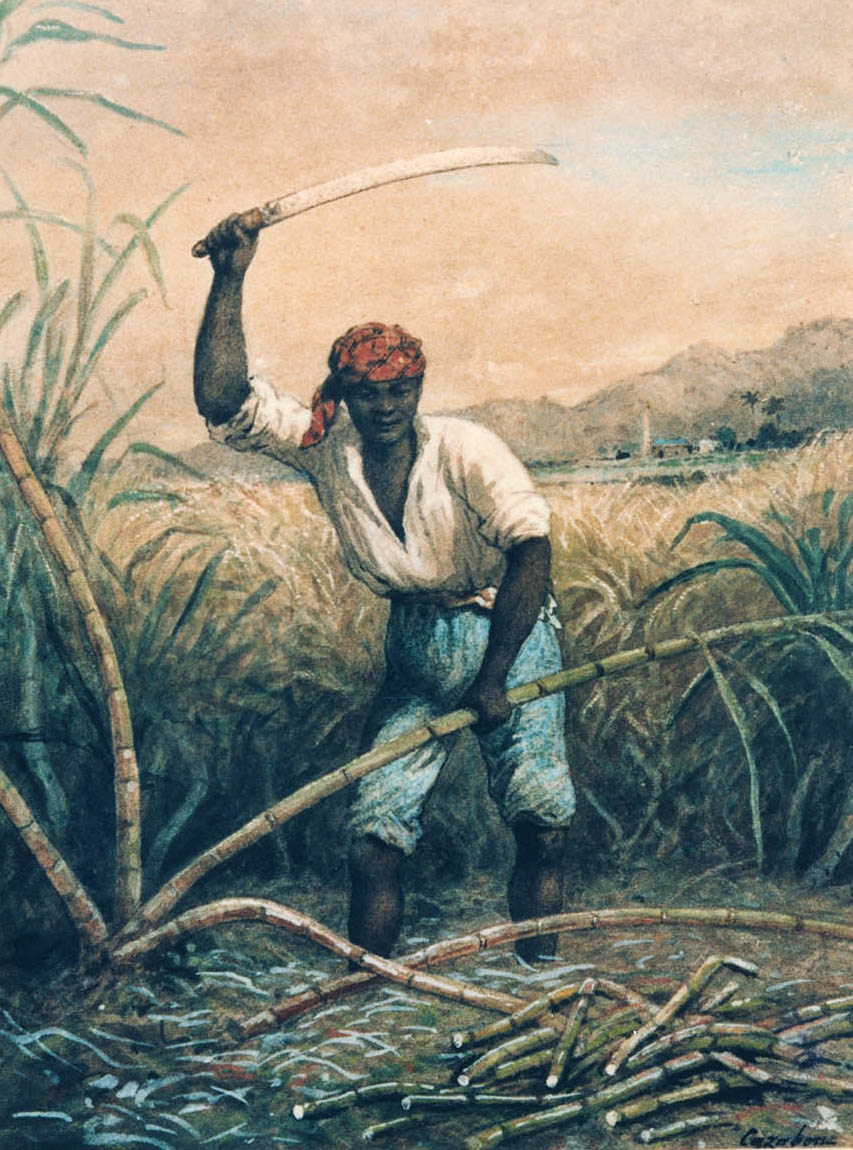
The Jamaican Legislative Assembly wanted to retain control over
apprentices and land by banning cane cutting, the main way formerly
enslaved people made ends meet. Former slaves lacked representation
to voice themselves.
“Since emancipation [cane cutting], and ‘squatting’ on abandoned estates...had been codified as crimes ...Now the Assembly proposed punishing cane cutting with whipping, or a return to ‘apprenticeship’ for those under 16.”— Chris Day, National Archives (Day, 2022).
Because of the Act, abolitionists viewed whipping as an
inappropriate punishment for cane cutting and thought of whipping as
a symbol of slavery.
Image: (Schomburg Center for Research in Black Culture, 1862).
“Petitioning the Secretary of State for Colonies, Edward Cardwell MP, to veto the Bills, the Anti-Slavery Society noted that ‘the whip is the symbol of slavery’ and its return, coupled with ‘a revival of involuntary servitude or slavery’, expressed a ‘mischievous and dangerous tendency’ on the Assembly's part. They feared the Black population would be forced to riot if they were carried.”— Chris Day, National Archives (Day, 2022).
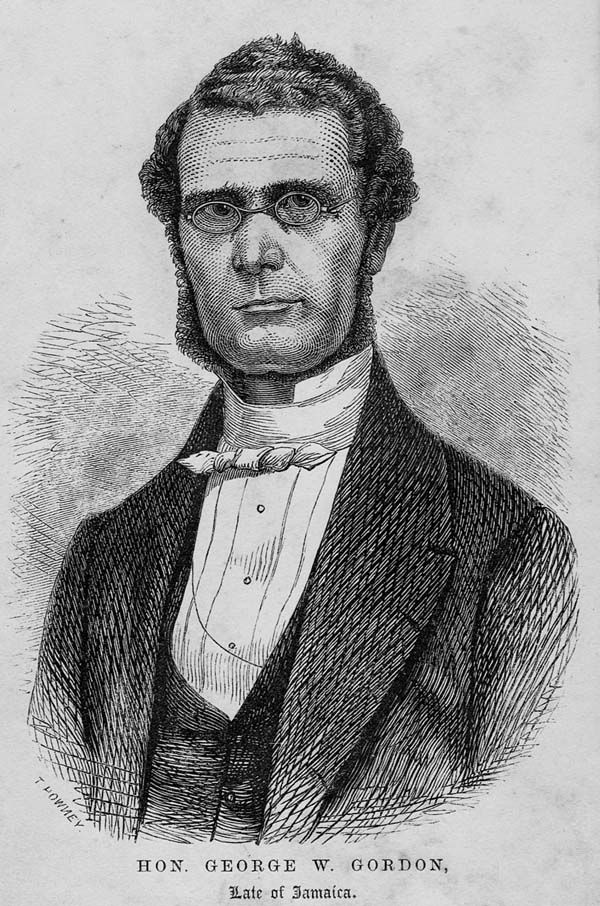
George W. Gordon, the son of a wealthy white planter and formerly
enslaved mother, was appointed to the Jamaican Assembly in 1865 and
advocated for former slaves. Gordon was disliked by the mayor
because he called out inequalities between people
(Cavanaugh, 2001).
Image: (Fletcher, 1867).
“This is an illustration of the one sided legislation of the Assembly, and it is no wonder if the labouring classes have many burdens to bear and wrongs unaddressed while they possess no effectual voice in the making of laws which touch their interests.”— George W. Gordon ("Disturbances in Jamaica", 1866).
The Rebellion was violent.
Image: Morant Bay Rebellion of 1865 (Watson, 1964).
“A few hundred Black residents of rural Jamaica rebelled against the vagaries of an overly zealous magistrate. They set the courthouse at Morant Bay on fire and killed over a dozen people, mostly white. In the savage government reprisals that followed, over 430 Black Jamaicans were executed.”— Stephen C. Russell, history professor at John Jay College (Russell, 2022).
(Slaves Cutting the Sugar Cane, 1823).